The Ultimate Mind Game: Conquering Chess with Clever Moves
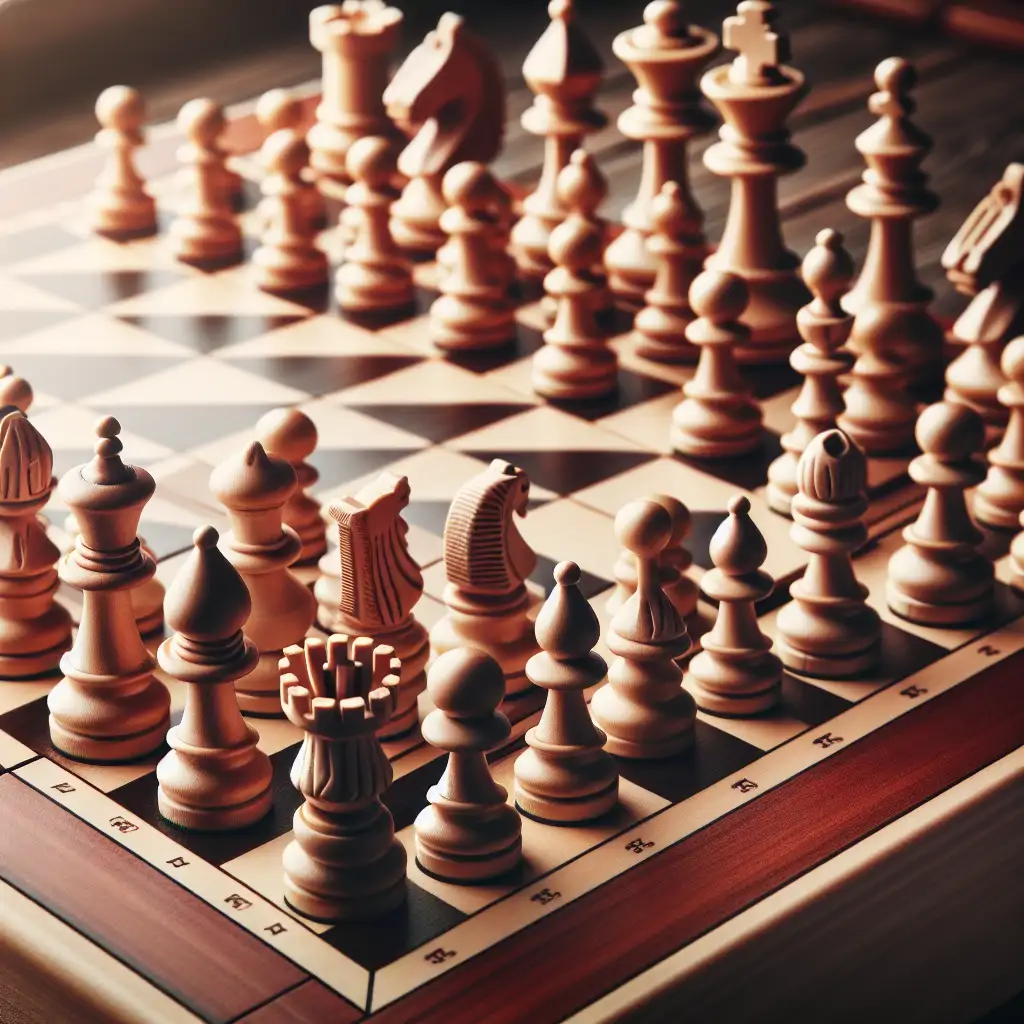
Chess is not merely a game; it's an epic duel between intellects on a battlefield that's as old as civilization itself. Imagined around 1500 years ago, this game has evolved into a global obsession. From grandmasters like Garry Kasparov to weekend enthusiasts, the allure of chess lies not in the power of the pieces but in the power of the mind. Every move is a decision, every strategy a battle plan, and the stakes can be nothing less than victory itself. Chess is the ultimate representation of brains over brawn, where a subtle pawn move can lead to the downfall of a seemingly invincible king. In this guide, we'll dive into the world of chess, unraveling its mysteries, strategies, and even some comical blunders to avoid. Whether you're a total beginner or a seasoned player looking for a fresh insight, we've got something in store for you. So set up your board, take a deep breath, and get ready to immerse yourself in a game where every move matters, and clever tactics reign supreme.
In the realm of chess, the pieces may be silent, but their actions speak volumes. From the majestic queen who glides across the board to the knight whose unpredictable movements can befuddle novices and experts alike, each piece holds extraordinary power when wielded wisely. Yet, it's often the humblest of pieces, the pawn, that can become a hero, marching bravely across the board to bring an opponent to their knees. Here, we'll explore the essence of chess, its strategic depth, and the mind games that make it eternally fascinating. We'll look at opening gambits that set the tone, middlegame tactics that test your wits, and endgame strategies that can turn a dire situation into a brilliant checkmate. Along the way, we'll share some lighthearted stories and faux pas, because even in a game as serious as chess, laughter can be a powerful ally.
So grab your chess set, whether it's a beautifully carved wooden masterpiece or a virtual board on your device. Chess is not just a test of skill and strategy; it's a journey into the very fabric of thought and reasoning. Embrace the challenge, learn to anticipate your opponent's moves, and discover the beauty of this mind game that has captivated human intellect for centuries. Get ready to conquer chess, not by brute force, but through clever moves and insightful thinking. Welcome to a world where logic, cunning, and creativity come together to form an exhilarating experience, unlike any other board game. Let the battles begin!
Opening the game with a perfect gambit is akin to launching an unexpected surprise attack. Your goal is to control the center of the board, develop your pieces efficiently, and put your opponent on the back foot from the very start. One of the most renowned openings, the Sicilian Defense, is favored by many grandmasters. It allows black to engage in a counterattack from the first move. Meanwhile, the King's Pawn Opening can lead you into familiar waters if you're more of a traditionalist. Regardless of the opening you choose, it's vital to understand its nuances, strengths, and potential pitfalls.
Middle-game tactics require a more refined approach, where the battle truly heats up. This is where misconceptions and weaknesses are exploited, positions are fortified or destabilized, and the mental sparring intensifies. Techniques like forks, pins, and skewers become essential weapons in your arsenal. A well-timed fork can lead to the capture of key pieces, making your road to victory much simpler. Ensure you're always on the lookout for opportunities to double your rooks or line up your bishops for a deadly diagonal attack.
Understanding your opponent's strategy can be as crucial as refining your own. This element of chess is often considered the psychological warfare of the game. Are they lining up for an inevitable checkmate, or are they setting a cunning trap, waiting for you to make a misstep? Observing the subtle shifts in their strategy can give you an advantage, allowing you to anticipate and counter effectively, ensuring you're always two moves ahead in the mental chess match.
The endgame is where true mastery shines, where each move can make or break your triumph. With fewer pieces on the board, precision becomes imperative. Knowing when to exchange pawns, how to create passed pawns, and mastering stalemate tactics can be key components in turning a near defeat into a stunning success. The famous Philidor and Lucena positions are must-knows for anyone wanting to elevate their endgame skills. Often, it's about who makes the final, clever move that determines the victor.
Chess is as much about learning from defeat as it is about basking in victory. Every loss offers a lesson in humility and strategy, helping you refine your approach and close gaps in your understanding. Analyzing your games, especially those where you fall short, is an invaluable process that turns temporary setbacks into long-term growth. Partnering with apps that analyze your games or finding a community of fellow chess enthusiasts can offer fresh insights and perspectives.
Humor is an often-overlooked component of chess, but it's an essential one. Many a great game has been lightened with a well-timed quip or laugh at an unexpected blunder. Embrace these moments of levity—they're a reminder that even in this serious arena, enjoyment and amusement have their place. Remember the time when even Garry Kasparov accidentally knocked over his king during a match? Mistakes happen, and sometimes they're the best teacher and entertainment around.
Identifying patterns in chess is akin to finding hidden pieces of a puzzle. Recognizing common patterns can lead to intuitive decision-making, making your game smoother and more forceful. This involves knowing various checkmate patterns, identifying recurring traps, or simply understanding the best positioning for your pieces. Mastering these patterns allows you to play not just with a strategy but with a graceful flow, connecting one move seamlessly to the next.
Chess champions often speak of the importance of studying classic games. The rich history of chess is filled with incredible matches that have shaped modern strategies. Games played by legends like Bobby Fischer, Mikhail Tal, and Anatoly Karpov offer endless insights into genius strategies, groundbreaking moves, and inspirational comebacks. Studying these games enables you to appreciate the depth of chess and encourages you to integrate these time-tested techniques into your repertoire.
Developing chess intuition is about more than learning the rules—it's about connecting with your strategic mind on a deeper level. Beyond predicting obvious moves, intuition is what allows you to sense an attack that's not yet visible, a defense just waiting to be exploited. Building this intuition takes time and practice, combining your acquired knowledge with your unique strategic flair. It's this blend of experience and instinct that sets grandmasters apart from mere players.
The art of sacrifice is a revered component of chess strategy, often misunderstood by new players. Offering up valuable pieces to gain a superior position or to capture a vital piece of your opponent can change the course of a game. Well-known sacrifices like the queen's gambit have entered into the lexicon of chess, signifying that giving up something important can sometimes lead to unexpected and triumphant gains.
Chess variants add a layer of unpredictability, keeping the game fresh and intriguing. From blitz chess, where you have to think on your feet with just a few minutes on the clock, to bughouse chess, where teamwork turns strategy on its head, these variants bring new challenges and excitement. Playing these variations with friends can add spice to your chess routines, providing a fun, fast-paced departure from traditional gameplay.
Holding positional advantage is crucial in chess. It's not always about capturing more pieces but about maintaining control over key areas of the board. An effective positional strategy ensures you can manoeuvre freely, dictating the flow of the game. This involves controlling central squares, safeguarding your king, and preparing your pieces for both defensive and offensive roles. In essence, it's about owning the board itself, not just the pieces.
Learning chess notations can become a deciphering tool, unlocking a language that allows you to analyze games, both current and past. Becoming fluent in this notation makes understanding and discussing strategies far more accessible. It opens the door to engaging with the chess community, offering a universal method of documenting and sharing timeless strategies or thrilling game analyses.
The psychological element in chess cannot be overstated. It's a game of minds meeting across a board, an infinitely complex conversation between two opponents. Maintaining concentration, interpreting tells, and managing nerves are as critical as any opening or endgame strategy. Mastering these mental challenges sharpens your skillset for chess and enhances your problem-solving prowess in everyday life. It's this dance of minds that keeps chess eternally fascinating.
A tried-and-tested method of improving in chess is solving chess puzzles. These are akin to mental workouts; practical exercises designed to enhance your tactical acuity. They pose real-world challenges such as calculating the best moves within a finite number of plays or finding a guaranteed checkmate. Chess puzzles are an enjoyable and fulfilling way to exercise your brain and apply theoretical knowledge in scenarios that mirror games.
When discussing key chess strategies, controlling the center of the board is consistently at the forefront. The importance of central control cannot be understated, acting as a springboard for mounting attacks and seizing opportunities. Controlling these critical squares limits the mobility of your opponent's pieces while empowering your own tactical endeavors. This timeless principle remains a core strategy from your first game to your thousandth.
Endgame theory is where many players find a challenge, but learning these principles elevates your gameplay significantly. Building on knowledge such as king and pawn versus king endings or the principles of opposition can mean the difference between a hard-fought victory or a disappointing draw. Delving into endgame theory offers a rewarding glimpse into the subtleties of chess and often forms the crux of championship matches.
Blunders are an unavoidable part of chess but recovering from them is a mark of a great player. Everyone has moments of oversight where a seemingly innocuous move turns disastrous. The key is to evaluate the board afresh, adapt your strategy, and continue with renewed focus and determination. Learning to recover quickly from mistakes turns a game of potential loss into a battle for glory, a lesson extending beyond the chessboard.
Embracing creative play in chess can lead to some astonishingly beautiful games. Creativity encompasses everything from exploring unconventional openings to setting novel traps. This imaginative approach often catches opponents off-guard, as innovation breeds unpredictability. Allow yourself the freedom to experiment, to step away from conventional moves, and you might just discover a spellbinding chess style all your own.
Chess is often depicted as a lone ranger's domain, but playing with and learning from peers expands your horizon. Engaging with a community of players introduces varied styles, strategies, and valuable discussion. Joining local chess clubs, participating in online forums, or competing in tournaments connects you with other enthusiasts, offering a wealth of collective wisdom. It's this shared passion that elevates chess into both a sport and an art form.
Time management is a skill that chess cultivates rigorously. Whether in standard play or blitz tournaments, you'll often find yourself racing against the clock. Developing the ability to make decisive moves quickly while balancing thoughtful strategy helps you keep cool under pressure. Timing impacts every aspect in chess, from crafting your opening to managing your endgame. Efficient time use can often translate into life lessons about prioritizing and multitasking.
The adaptability of chess ensures it never grows stale. With every match being unique, players must often transcend traditional strategies and adapt on the fly. This capacity to respond and adjust to ever-evolving scenarios defines chess mastery. The beauty lies in adapting classical approaches to the modern landscape, and this adaptability keeps each game fresh, igniting your love for the game time and time again.
Technology continues to transform how chess is played, learned, and studied. From online games with opponents worldwide to analytical algorithms that deepen our understanding, technology offers unprecedented resources for improvement. Chess engines dissect your moves, offering enlightening critiques, while online platforms foster global competition, blending tradition with modern expansiveness and connectivity.
Teaching and mentoring in chess present a fulfilling avenue for seasoned players. Sharing your knowledge with newcomers enriches both the teacher and learner. As you impart strategies and spark a passion for the game, you’ll also refine your skills, gaining fresh insights. Chess becomes more than a personal journey—it's a shared path of exploration and discovery, nurturing talent and fanning the flames of enthusiasm.
Incorporating storytelling into chess narrates the tantalizing dramas played out on the board. Every game holds a narrative; from a miraculous escape to an unexpected underdog victory. Relishing these stories enhances the allure of chess, revealing the human element amidst the mechanical precision. Sharing these anecdotes brings chess to life, transforming abstract strategies into compelling tales remembered long after the final move.
The charm of chess extends beyond the immediate board and match. Its influence permeates culture, art, literature, and film. Chess serves as a metaphor, reflecting strategic thinking, the complexity of human nature, and life's battles. Delving into its cultural impact enriches your understanding of both the game and the subtler nuances it illuminates in human society. This cultural tapestry cements chess's timeless intrigue.
Achieving balance in chess juxtaposes offense with defense, aggression with patience. This delicate equilibrium is a skill honed through joyful practice and reasoned study. Knowing when to advance your pieces or when to preserve your forces requires wisdom and foresight. Balance underpins successful gameplay, reflecting the delicate dualities found within the game and echoing life’s broader challenges.
Confidence in chess is built upon understanding, experience, and practice. Cultivating this confidence empowers you to execute bold strategies and deflect pressure. Confidence transforms doubt into determination, refines your focus, and amplifies your enjoyment of the game. However, confidence tempered with humility fosters growth—remaining open to learning ensures you persistently evolve as a player, mirroring the ever-changing dynamics of chess.

Chess is more than a game; it's a rich tapestry of strategy, intellect, and human experience woven into a timeless battleground. By embracing the complexities and nuances of this remarkable game, you embark on a journey of endless discovery. From the initial openings to the final checkmates, every moment holds the potential for growth, enjoyment, and revelation. As you refine your tactics and enjoy the camaraderie of fellow enthusiasts, remember that chess is as much about the moments shared and lessons learned as it is about the victories celebrated.
Whether you're a humble pawn making its way to potential greatness, or a seasoned player navigating an ever-complex chessboard, the world of chess welcomes you with open arms and endless possibilities. Embrace every challenge, celebrate every victory, and learn from every mistake. Chess is a testament to the resilience of the human spirit, a celebration of wit, and, above all, an adventure into the depths of strategic creativity. Your chess journey awaits, one move, one decision at a time.
In the grand scheme of board games and mind sports, chess stands out as a true art form— a game where each participant paints a unique portrait, stroke by calculated stroke. Let this guide serve as a catalyst for your adventure into chess, whatever stage you're at. May you grow as a player, a thinker, and a passionate member of this vibrant community. With clever moves, laughter, and learning along the way, prepare to conquer new opponents and yourself in the ultimate mind game of chess!
Thanks for taking the time to read my article! You may also find this one interesting.
Meeple Mayhem: Strategic Surprises in Small WorldTil next time! Katie

Katie
Katie is a wildlife guru by day and a passionate part-time blog writer. With her deep expertise in nature and a gift for vivid storytelling, she crafts compelling articles that bring the wonders of the wild to life, captivating readers with her knowledge and love for the natural world.
A proud member of the B-Team
If you're curious to dive deeper into related topics, then you may find these external links useful.
1. Chess.com
One of the largest online chess platforms, offering games, lessons, and puzzles for players of all levels.
https://www.chess.com/2. The Chess Website - Strategies
A resource for learning chess strategies, including opening techniques, middlegame tactics, and endgame strategies.
https://www.thechesswebsite.com/chess-strategy/3. FIDE - World Chess Federation
The official website of the World Chess Federation, providing information on tournaments, rankings, and chess news globally.
https://www.fide.com/4. Lichess.org
A free, open-source chess server where you can play, study, and watch chess games with a community of enthusiasts.
https://lichess.org/5. Garry Kasparov's MasterClass
An online MasterClass by Garry Kasparov teaching chess principles, strategies, and insights from a grandmaster's perspective.
https://www.masterclass.com/classes/garry-kasparov-teaches-chess©2023 - 2026 SP Software Solutions Ltd. All rights reserved.